
How Arrest Warrants Work in Washington County
Utah law lets a magistrate sign an arrest warrant when sworn facts establish probable cause and the statute's conditions favor a warrant over a summons. Utah Code section 77-7-5 spells out those findings and what the order must contain. In Washington County, felony complaints generally go to the Fifth District Court. A Justice Court judge may also act as magistrate within that court's own authority. The process starts with an officer's complaint or affidavit. A judge reviews it and either approves or denies the request. Once signed, the warrant names the law-enforcement agency with jurisdiction. The issuing court keeps control of the case record and any later change to the order, so questions about status go back to that clerk.
Utah Code Limits Washington County Arrest Warrants
Section 77-7-5 gives a magistrate two jobs before swapping a summons for a warrant: accept that probable cause exists and make the required findings that this process is needed. The judge's order then identifies the agency expected to act. There is no public application form for any of this. The sworn material can stay sealed while a case is pending. Anyone with a question about a specific Washington County case should contact the issuing court or a lawyer. The public Statewide Warrants portal shows neither the affidavit nor any decision on whether a court should recall an order; that call belongs to the issuing court alone. Utah Code Title 77 holds the current arrest-warrant provisions.
Inside a Washington County Arrest Warrant
Before fixating on a charge or a dollar figure, read the issuing court and the reference number off the order. Those two facts route every question. The state warrant schema keeps personal identifiers apart from warrant details and can tie several court orders to one person. Public views may show less than the internal law-enforcement record, and Washington County sources follow no universal number format, so the clerk's file controls.
| Case or warrant number | Copy the court reference as shown; no local public format was verified. |
|---|---|
| Named person | Identifier fields can be limited in public views. |
| Charge | Offense, statute, and felony or misdemeanor class when public. |
| Issuing court | Fifth District or a Justice Court magistrate within jurisdiction. |
| Agency with jurisdiction | The law-enforcement office named to execute the warrant. |
| Bond and status | Case-specific amount and active, served, attempted, or recalled state. |
Washington County Magistrates and Arrest Warrants
The Fifth District Court is Washington County's general-jurisdiction trial court. Felonies and class A misdemeanors land there. Justice Courts handle many class B and C misdemeanors, infractions, traffic matters, and local ordinances. A magistrate's reach depends on the case and the statute. A city ticket and a felony complaint may never reach the same clerk. Route any question by the court name on the citation, case, or statewide result. One caution: the Washington County Clerk/Auditor is not the clerk for criminal case files, so warrant questions go to the court itself.
Serving Arrest Warrants in Washington County
The agency named on the order is the one that can serve it. Washington County Sheriff's Office patrol, St. George Police, Washington City Police, Hurricane Police, and Santa Clara-Ivins Public Safety each fill distinct local roles, and other peace officers may act when the assignment or jurisdiction allows. If law enforcement has already made contact, the jail handles booking and custody questions. Call the court about the warrant itself. Call the jail about booking or bond logistics. Service alone does not dismiss the underlying charge, so the case continues in the issuing court either way.
Washington County eWarrant Approval Flow
Utah's eWarrant manual sketches the flow. An officer enters the required information, generates an affidavit through UCJIS, and sends it to an on-call judge. Approval or denial can come quickly. An approved document gets a digital signature and the court seal. This is internal law-enforcement workflow, not a public portal for filing or checking a warrant. Once a court enters the order, the case file and the statewide system may reflect related status. The issuing court in Washington County remains the right place to ask whether a warrant is active, served, or recalled.
Comparing Arrest, Summons, and Bench Warrants
These three documents do different jobs. An arrest warrant authorizes taking a person into custody on a probable-cause finding. A summons orders an appearance without that arrest power. A bench warrant answers a missed court requirement in an existing Washington County case, and each type leads back to the issuing court.
| Feature | Arrest Warrant | Summons | Bench Warrant |
|---|---|---|---|
| Purpose | Authorize an arrest | Direct an appearance | Enforce a missed court requirement |
| Basis | Probable cause and warrant findings | Charging or court process | Failure to appear or comply |
| Issuer | Magistrate or judge | Court or authorized officer | Judge in the existing case |
| Response | Ask court or counsel about surrender and bond | Appear as directed | Contact issuing court about recall or payment |
Agencies Serving Washington County Arrest Warrants
Which office shows up to serve a warrant in Washington County depends on the agency listed with jurisdiction. The county sheriff's patrol office sits at 620 South 5300 West in Hurricane, and its phone number is (435) 656-6500. That patrol side handles the law-enforcement work. For custody and bond questions, call the Purgatory Correctional Facility instead at (435) 656-6600; the jail sits at 750 South 5300 West. City departments run their own warrant operations, so a municipal warrant check may lead to a different phone. St. George Police lists records at (435) 627-4301, Washington City Public Safety at (435) 986-1515, Hurricane Police at (435) 635-9663, and Santa Clara-Ivins Public Safety at (435) 652-1122. A federal court page explains the separate St. George federal court location.
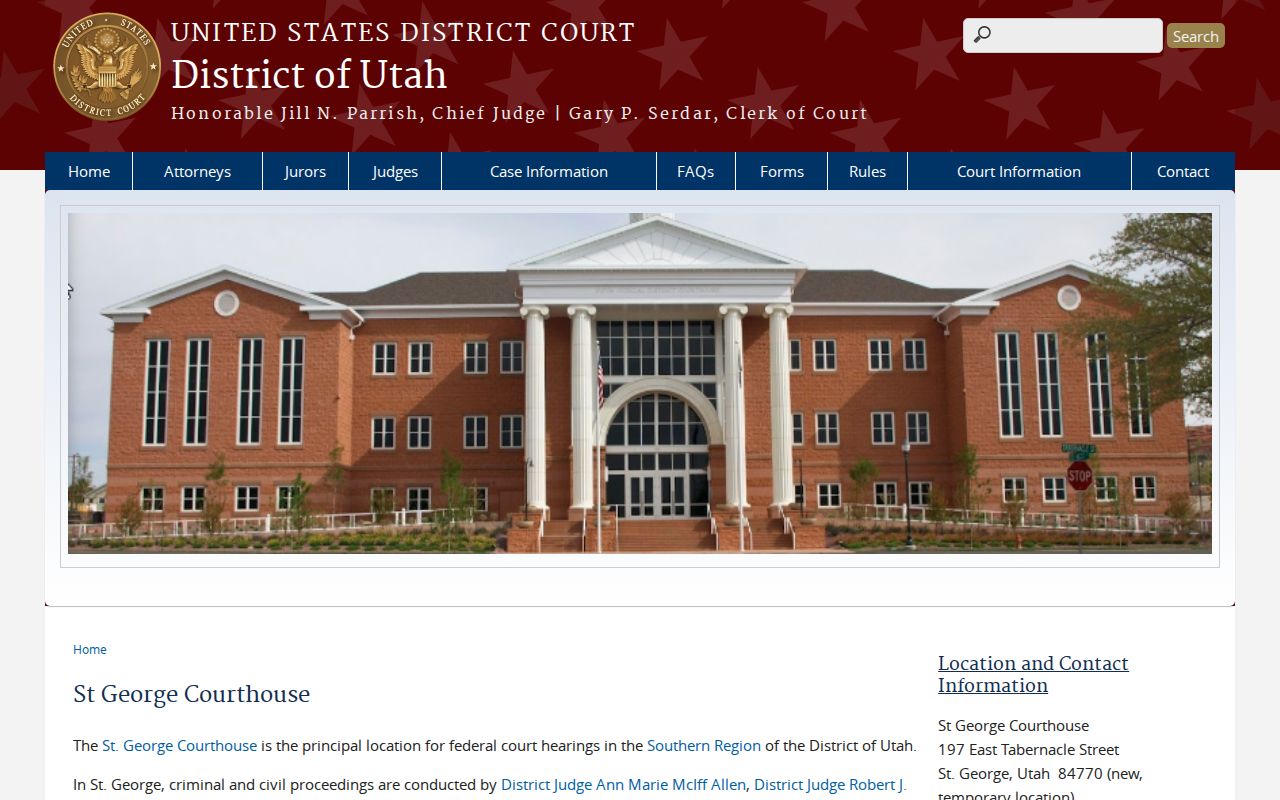
Washington County sits in Utah's state courts, and federal cases run through a wholly separate system, so don't look to one for the other's warrant records.
If There's an Arrest Warrant for You
Found a warrant with your name on it? Write down the court and case number. Then call that issuing court in Washington County before visiting a sheriff office or the jail. Ask if the warrant is still active. Ask whether counsel can request a recall, arrange a walk-through, or tell you where bond must be posted. If the court directs surrender, call WCSO or the jail for current booking instructions. A bond can address release conditions. It does not end the case. Washington County's WCSO 2025 fraud notice warns of callers demanding Venmo to clear a warrant, so never pay an unsolicited contact. Keep your receipt, and ask the court how to verify the status after an order.
Important: If surrender may be needed, consult counsel first. Ask the issuing court for current instructions, then verify booking and bond details with the jail.
Federal Warrants Sit Outside Utah's Search
A federal warrant stays out of Utah's Statewide Warrants portal. Federal cases tied to Washington County belong to the District of Utah, with Southern Region proceedings in St. George. The federal clerk, your counsel, or a PACER docket is the right case route. No public federal warrant list exists for a self-check. Federal complaints or indictments may stay sealed until service. If a notice hints at a federal case, don't lean on a county result. Ask a lawyer or the federal clerk for the correct process.